

" It never, ever, ever stops" - Eithne volunteer at Samaritans
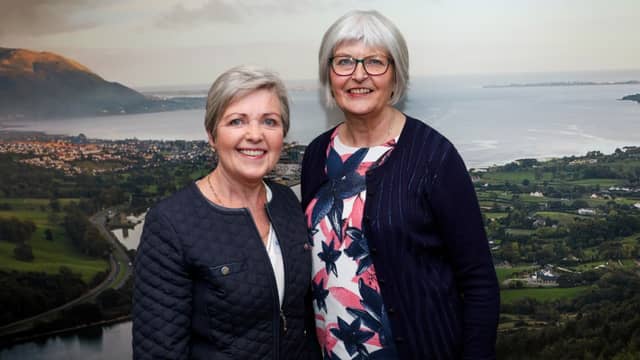

WHILST the Samaritans do everything with the resources on hand to maximise the efficiency of their service delivery this would all be for naught if it were not for their dedicated team of volunteers who diligently receive calls from individuals during their moment of need. One such volunteer is Eithne , who has dedicated over 30 years of her time as a volunteer working for the organisation.
WHILST the Samaritans do everything with the resources on hand to maximise the efficiency of their service delivery this would all be for naught if it were not for their dedicated team of volunteers who diligently receive calls from individuals during their moment of need.
One such volunteer is Eithne , who has dedicated over 30 years of her time as a volunteer working for the organisation.
Eithne can attest with first hand experience the considerable strain the organisation is under , with the long term volunteer relating the fact that as it stands calls, "never, ever, ever stop," when she and her colleagues are on duty.
"Our system is linked up with all the branches of Samaritans in these islands. So if you call Samaritans now you will get whoever is free and you could receive a call from Shetland, the Isle of White or anywhere. You are going to be totally anonymous.
"We are all volunteers. None of us are paid. We are here in the evenings, we are here at night, Christmas Day, during the bad weather, New Year’s Day, all the bank holidays. We do this because we know it is important, we have been listening for so long and we have seen the effects of listening. You are not listening to a problem, you are looking at what is going on inside that person. It is the feeling that people carry. Sometimes it is very heavy. They are putting on this face but there is something that they are not coping with. They tell us bit by bit. Bit by bit they can her themselves talking and they begin to feel how they can cope with this
"We are extremely busy. Because of the lack of access to GP's, mental health service and all these sort of things people are being told if they are in crisis and cannot wait to come to us. We have people with mental health problems, people phoning us because they maybe have to wait months and months for an appointment. We have a lot of prisoners calling us because there is no one there. The police can call us at times and ask us if they will listen to someone.
"It never, ever, ever stops. I could be on a call for an hour, the next call could be 20 minutes, the next call could be an hour an a half, the next call could be short. I have left the building having had 2 calls, I have left here having had 10 calls. It just depends how long the person feels comfortable talking to you and sharing with you.
"The most difficult calls are from people who are in the darkest places and this transfers to you. You are in this darkness with them, but you keep going. Someone told me one day, and I thought this was lovely in reference to the Samaritans, “you are the link to the light” and I thought this was beautiful."
Providing more detail on the exact services that the Samaritans administer whenever an individual calls up looking for help was Ethne’s colleague Nuala, whose own journey with the organisation began four years ago in 2019 just before the onset of the Covid-19 pandemic.
"I am originally from Dundalk in County Louth. My reason for volunteering in Samaritans in Newry is because Dundalk and Newry are neighbouring towns.
"I was coming up to retirement and I wanted to do something meaningful during my retirement. I always wanted to do volunteering but I never had the time. I picked Samaritans because I felt that Samaritans do not discriminate regarding what your problem is. If you have a problem and you need help Samaritans listens to everyone.
“ It is a privilege to sit and have people open up and trust you enough. You can help them go through this and break it down step by step so that it becomes more manageable. A lot of people when they call up are in such a place that they cannot think straight. So what you are trying to do is unravel it and give them space in their head to think about it a little more clearly and they will then come up with their own solutions.
"We also offer a call back service where if we feel that someone needs more help we can offer them a call back where we take contact details and we explain to the person that it will necessitate them giving us their contact details. You see when someone calls up they call our number. We have absolutely no idea where someone is calling up from unless they choose to tell us. They are completely anonymous because we do not track or manage calls.
"So the conversation is between you and the listener. When the conversation ends this is when the conversation ends. We don't take notes and if we do take notes we shred the notes after the call.
"The shifts are three and a half hours long. They run from 9am in the morning until 2am. Currently this is Monday to Friday. There are three shifts on a Saturday and then it finishes at 11pm on a Sunday. However because they way the system is the other branches can take over. You are always going to get a reply if you call up. "
Nuala states that she has been receiving calls from service users who are in distress for predictable reasons, however she has also been picking up the phone from less traditional callers as well, such as asylum seekers.
"Because of the isolation that took place during Covid it was not just older people who felt a lot more isolated , younger people feel a lot more isolated also. They have lot less confidence in going out there and making friends and building relationships with other people. You get quite a lot of calls from young kids in college who have left school. They may be out there for the first time on their own really trying to manage an awful lot of new environments.
“They are really feeling the pressure and stress and they do not have a network of friends either from home that they can fall back on and they do not know how to build new relationships with people.
"You have a lot of stress on that front. You also have a lot of older people who cannot get to their GP's. In England in particular it is all phone calls to their GP's. They do not get this interaction with them and they are physically not in the room with them. They are very stressed about this. You get an awful lot of those kinds of calls. We are also getting calls from asylum seekers. social services are advising them to call Samaritans. We are now taking calls from people who are coming into the country and they are reaching out to us for assistance."
If you have been affected by any issues raised in this article Samaritans are on hand to help you at 116 123.