

'In the mortuary I saw all ten bodies of the victims who had been shot'
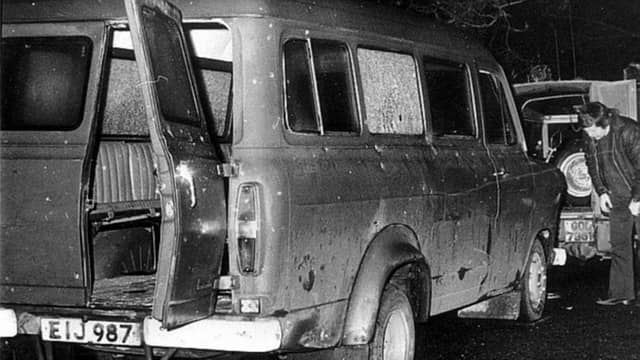

WHEN searching through the annals of the over 30 year long period of sectarian bloodshed and conflict that plagued Northern Ireland it is somewhat disheartening to learn that there exists an overabundance of atrocities which could best exemplify not only the sheer horror but utter futility of war and the destruction it brings.
WHEN searching through the annals of the over 30 year long period of sectarian bloodshed and conflict that plagued Northern Ireland it is somewhat disheartening to learn that there exists an overabundance of atrocities which could best exemplify not only the sheer horror but utter futility of war and the destruction it brings.
From Bloody Sunday, to the Remembrance Day and Omagh bombings it is a regrettable but raw reality that the people of the north are only too well acquainted with the long term trauma and pain caused by the callous violence that we humans have the potential to inflict upon one and other in the darkest moments as a species.
However for the people of South Armagh the one atrocity that was committed during the troubles which left the most profound scar upon the community and whose long-term effects can still be felt to this very day 48 years after it was carried out is the Kingsmill Massacre.
On the evening of January 5 1976 ten Protestant workmen were mercilessly gunned down by republican paramilitaries along the Kingsmill road as they returned home on their mini bus from a textile factory in Glenanne with the callous act of brutality leaving only one survivor in the form of local man Alan Black.
The atrocity itself was carried out in retaliation for the murders committed by loyalist paramilitaries upon members of the Catholic Reavey and O'Dowd families only one day prior on January 4, with also only one survivor emerging from this atrocity in the short term in the form of Anthony Reavey who would sadly pass away from the wounds he sustained only one month later.
Now as the anniversary of both of these unfathomably cruel and callous atrocities approaches yet again Bessbrook man John Davis, who served diligently in the wards of Daisy Hill Hospital for three decades, has come forward to share his memories of the night in which the victims of the Kingsmill massacre were brought into the hospital.
No Anticipation
“On the evening of January 4 whenever the Reaveys were shot I was already off duty as I had an early afternoon so I was gone. However the night before which would have been January 3 I saw Brian Reavey coming in to pick up his girlfriend Alice Campbell who was a nurse in the hospital.
“It was only as I got home on the evening of January 4 did I hear that news was coming in of a shooting in Whitecross. Anthony Reavey was brought in to Daisy Hill on the evening of January 4 and he ws treated for his gunshot wounds and he was admitted to the ward.
“The morning before Kingsmill as I was going into work I also saw John McConville who was one of the victims of the shooting going to his work.I bid him the time of day and talked about the weather before I got the bus to Daisy Hill. However on the evening of the fifth I saw John lying dead in the mortuary.
“That day I had an 11.30am to 9pm shift. What happened to the Reavey brothers was a topic of conversation and there was a sense of sadness about the place. However despite this no one in their wildest dreams could have anticipated what was about to happen,
“At 5.30pm I was coming back from tea in the dining room and I was heading towards casualty and just at that moment the doors opened and I heard the phone ring. Sister Rita McAllister who was a staff nurse lifted it up and I saw a look of total shock on her face and she shouted over to me to get casualty ready. The first reports were that there had been a bad road traffic accident.
Flashbacks to this day
“So we got casualty ready and waited for a while and then a phone call came in and we were told that 10 were shot. We waited a little bit longer and then the phone rang again from the ambulance to inform us that there were 10 black and one red, black meaning dead and red meaning seriously injured.
“It was Alan Black that was brought in. Alan had been shot 18 times although he was still fully conscious at this stage. We put him on the resuscitation area and Dr John McGuinness then came in who was the anaesthetist Then the late Mr Blundell came in as well as the hospital chaplin who came in and said a few prayers for Alan.
“Dr McGuinness asked me to hold a mask onto Alan to give him oxygen whilst he inserted an IV drip to get fluids into his body to stabilise him before he was moved onto theatre. He was then rushed to theatre and Mr Blundell worked with him along with the theatre staff.
“I remember being in the mortuary that evening as I was sent they're to retrieve an anaesthetic machine. When I was there I saw all ten bodies of the victims who had been shot multiple times. “This left me very sad and bewildered and enabled me to really understand the futility of it all. These were innocent people doing a days work and coming home to their families.
“I still get flashbacks to this day and to this day one of the ways I deal with this is that I go to Newry Cathedral and light candles for them. I remember walking home that evening and it was a dark, dismal evening and it was a very somber atmosphere about the place.”
Although the murder of the Reavey brothers and the killing of the ten men at Kingsmill will forever be associated with the troubles in South Armagh, if any consolation can be retrieved from the callousness of these two atrocities it would be the close friendship that the two survivors of these incidents forged with one another in the aftermath, proving that above all else human solidarity can prevail in even the most direst of circumstances.
“Afterwards Alan Black was in the ward in Daisy Hill recovering from his injuries. He and Anthony Reavey were the best of pals as they had a bed to the right and a bed to the left of each other They were in the ward for about a week or two and it was lovely to see that they did not bare hatred against one another and they helped each other in many ways psychologically.”