

'I went into Marianvale one person and came out another'

FROM whenever it was first founded in the 1950’s as a “voluntary children's home” to when it finally closed its doors in 1984 the Marianvale Mother and Baby home acted as an ostensible refuge for many women and young girls who found themselves in the most difficult of life's circumstances. When being removed from your family and sent to live in a entirely foreign environment with women your age and younger who are just as, if not, more emotionally and physically vulnerable than yourself it would be the natural expectation that you should be treated with the utmost compassion and respect by those who have taken you into their care.
FROM whenever it was first founded in the 1950’s as a “voluntary children's home” to when it finally closed its doors in 1984 the Marianvale Mother and Baby home acted as an ostensible refuge for many women and young girls who found themselves in the most difficult of life's circumstances.
When being removed from your family and sent to live in a entirely foreign environment with women your age and younger who are just as, if not, more emotionally and physically vulnerable than yourself it would be the natural expectation that you should be treated with the utmost compassion and respect by those who have taken you into their care.
Regrettably however, as is the standard for the overwhelming majority of women and girls who were housed in church ran mother and baby homes, in the case of Adele Johnstone the level of decency received at the hands of the nuns who ran Marianvale fell well below the human average.
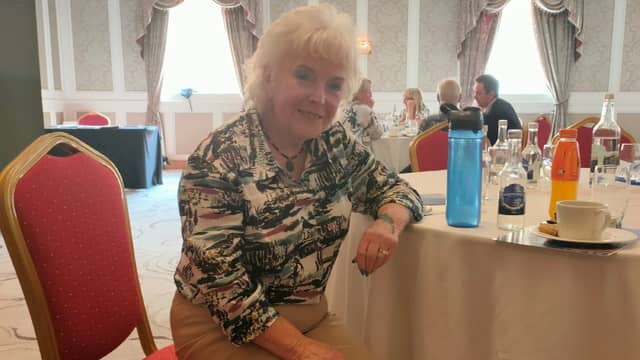
So traumatic was Adele’s time in the institution located on the Armagh Road, Newry that following her very valuable contributions to a public consultation for the public inquiry due to be held by the Executive Office into these organisations she related the fact that once her tenure at Marianvale had come to an end she considered herself an entirely different person from when she first entered the institution.
Fallen Women
“I was housed in Marianvale in 1970 for seven months. I was pregnant during this time and my baby was taken for adoption as I didn't give it up.
“I myself am an adoptee as I was born to a single woman in Belfast. When I was 18 I went into Marianvale where I had my son and he was taken for adoption. So my history repeated itself.
“I did not want him to go but it was like being in a fight and after a while you give up because the coercion was absolutely unbelievable. It was a drip, drip, drip of sayings such as you are not fit to have this child, you will never look after him, he is better of somewhere else etc. So in the end you agree.
“This is called coercive control and it was used in all the institutions and it doesn't matter if you were protestant or catholic you would have got this. We were fallen women and we had to atone for our sins. This was like a template that was used because they had someone lined up to take your child.
“When my child was taken I felt devastated, absolutely devastated. I went into Marianvale one person and I came out another. I never felt the same again but I went on with my life as I had to and had no other choice. I went back to work, married and had two more children but I never forgot my first child.”
Although Adele’s physical capabilities would have been somewhat hindered owing to the fact that she was pregnant at the time of entering the establishment this did not stop the nuns in Marianvale from exacting as much work out of both she and her fellow so called “fallen women”.
So great were the nun’s apparent disregard for Adele and her fellow fallen women’s wellbeing that they even derived entertainment from watching the pregnant women dance one day during the celebration of a religious festival.
Daily Routine
“In Marianvale we did a bit of laundry work but it wasn't a big laundry, it was a small area at the back of the house. We did not live in the big white house as the nuns lived in this big white house. We lived in a hut at the back with no heat just a stove in the rec room. This was like a stone building with a tin roof. The number of people you were with varied, it could be 20, it could be 10. It wasn't just grown ladies it could also be children say some as young as 14 or 15 years of age.
“We got up in the morning, went to church whether we liked it or not and whether you were fit to go or not as you had to atone for your sins and pray as you were a fallen women and a bad girl.
“This is what we did. We came back down and I don't even remember what it is I ate at Marianvale as the trauma was so great.
“You then did your chores which involved scrubbing the floors and washing the windows and you did whatever else you had to do, it was just work. You then went for a nap in the afternoon , got up after your nap and did it all over again. I can still see the wooden floors and smell the polish. To this day I hate the smell of polish.
“For this you were not paid a penny and our benefits were taken of us as we were all entitled to maternity allowances and grants but this was taken and you never saw it. All women were paid for in some shape or form by maternity allowance, grants, private payments, donations.
“One memory will always live with me. It was either Saint Patrick's Day or Easter and the nuns decided that they would put on a show, have pregnant girls put on a show. We were made to dance the jig for the entertainment of these religious women. We were dancing an Irish Jig for their entertainment, I will never forget this to the day I die.”
“After Marianvale I found it difficult to form relationships although I did marry and have children. However with my first child I had a breakdown because I thought someone was going to take him and I am still in counselling all these years later.”
Public Inquiry
For Adele, as is the case for many other women such as she that faced hardship and harassment in church ran institutions that many of us could not even begin to contemplate, the day of reckoning may finally have come for the men and women that subjected them to their prolonged period of torment in the form of the public inquiry launched by the Executive Office’s Truth Recovery Panel.
Whilst Adele welcomes the public inquiry as a means by which these organisations are held accountable for their actions, according to the 73-year-old the most important element of the inquiry is to ensure that as many people come forward to tell their stories as possible.
“The public inquiry, when it is sorted out, will be an acknowledgement of what happened and it is very important for people to come forward.
“People may not have told their families or husband’s but it is very important for people to tell their stories both catholic and protestant because the protestant community was affected as well and not enough of them are coming forward to give testimony about what happened. We have lived in the shadows for far too long so it is time that we say come forward and speak your truth.”