

Historian ensures history of Sugar Island not washed away
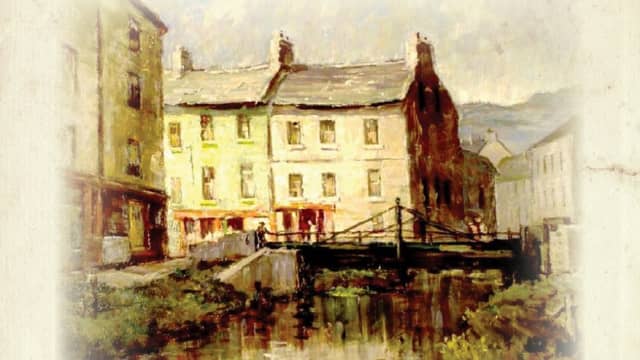

ON hand to ensure that the history of one of Newry's oldest geographic features is not washed away by the tides of time is local historian Hugh McShane, who has penned a new work documenting the past of Sugar Island.
ON hand to ensure that the history of one of Newry's oldest geographic features is not washed away by the tides of time is local historian Hugh McShane, who has penned a new work documenting the past of Sugar Island.
Written in his own trademark style the publication entitled Historic Newry Sugar Island provides a detailed but concise overview of the over three centuries of rich history pertaining to one of the cities oldest but still economically active areas.
Being the 12th publication in the former teachers eponymous Hugh McShane History series Historic Newry Sugar Island, much like the titles that preceded it, aims to capture and relate the many years of history that it covers in a form that whilst written with a certain degree of academic rigor also remains entirely palatable and comprehensible for the average reader who may only have an armchair interest in the history of the area.
According to Mr McShane it was owing to the devastating floods which left many of the contemporary businesses on Sugar Island under several feet of water in November which acted as the partial inspiration for the former Vice-Principal of Sacred Heart Grammar to pen his new publication on the area which has its origins at the beginning of the 18th century.
Best way to teach History
“Historic Newry Sugar Island is my 12th publication. My first publication was released in 2012 and this was on the Home Rule crisis. I have written various booklets on matters such as the Newry workhouse, the famine orphans of Newry Workhouse and Newry and partition.
“The background to the booklet is that in November 2023 Sugar Island experienced devastating floods and this reminded me of the History and the heritage of this part of Newry.
“ A lot of people do not realise that because there is such an easy transition through the various bridges that the area is actually an Island. It is serviced by the bridges that cross the canal and the Clanrye river. So these floods triggered in me an interest into doing a piece on Sugar Island.”
Mr McShane explained how his form of chronicling and relating history is ideally suited for those with a cursory interest in the past of the local area, with his booklets providing only a taste of the topics covered which if appealing to the average reader they can then proceed to take a larger bite out of.
“I give talks in different parts of Ireland North and South on local, national and International history. What we wanted to do is provide publications that were accessible to people. Historic Newry Sugar Island is 28 pages and printed in A5 format.This is one of the best ways to teach history. There is a lot of interest in local history as it seems to have had a bit of a revival. However people who have not taken the steps to reading history are perhaps maybe put off by the sort of more heavyweight publications.
“I think that what people want is a way into local history and that is what these books actually do. They provide people with a taster on the topics and the issues and if they want they can develop their interest from there.”
Although ostensibly Sugar Island may seem like any other part of Newry’s business district , according to Hugh the area in many respects acted as the origin point for much of the towns commerce and trade since the construction of a canal which served as a vital supply line between the area and Lough Neagh which serviced the importation of coal at the onset of the 1700’s.
Canal Connection
“Normally when I am writing these booklets it takes between 3 and 6 months before it actually comes to print. However I already had a certain amount of information about it anyway because I had been doing some research on the 1911 census and had been building up information about different areas of the town. Newry in the early 1900's was divided up into Newry West, Newry South, Newry North and Newry Rural. Sugar Island is in a part of Newry called Newry west.
“Sugar Island is man made and it really developed in the 1700's as a result of the building of the canal. The Canal was built between Newry and Lough Neagh. This serviced the importation of coal from Tyrone in particular. The Canal really lead to the development of the buildings and the warehouses. This also allowed companies such as Sands Mill to export their products as well. When the ship canal, which connected Newry with Carlingford lough, was built later in the 1700's trade increased. The car park behind the courthouse in Sugar Island was a turning basin for the ships that came up Carlingford Lough. The ships offloaded their goods in the warehouses that were there, many of which are now derelict. They then turned in that basin and went back out into the Irish Sea via Carlingford Lough.
“The business people and merchants of Sugar Island did not just trade in Sugar but in items such as salt, peppers, iron, coal, all of these sort of things from right across the world. So at that time Sugar Island was a very vibrant, busy and prosperous part of the Town. It was from the 1700's on to the early 1900's Sugar Island remained very prosperous.
“However eventually the arrival of road and rail transportation superseded the value of the canal in importing and exporting goods. So from the 1900's the canal started to go in to decline.”
Whilst Historic Newry Sugar Island may provide a cursory overview of the two centuries of economic history associated with the area, this, as is the case with most other historical epochs, is only one half of the story.
The other half that comprises the totality of the areas history is of course the human element of the men and women that made Sugar Island not only what it was in days gone by, but what it still is to this very day. This is one element of the areas history that is also still given fair due in Mr McShane's book.
“Historic Newry Sugar Island also traces the business people and the residents of Sugar Island. It looks at various incidents that occurred in Sugar Island, one of them being in the early 1900's.
“The Lord Mayor of New York, who was the youngest Lord Mayor of New York and remained the youngest as he was aged 31 when he was first elected, came to Sugar Island to visit a relative of his because his family originated in Mayobridge. His family then went to New York where he was born and raised. However, in 1902 he came to visit an old aunt of his who lived in Sugar Island who went by the name of Mrs Dempster.”
Historic Newry Sugar Island will be available from a number of outlets in Newry including Fiveways Supermarket on the Armagh Road, Boyds Stores and the Grotto in Hill Street. The publication will also be available from Mr McShane directly via his Facebook page Hugh McShane history for £4.99.
All of Mr McShane's other publications are still available for purchase as well.